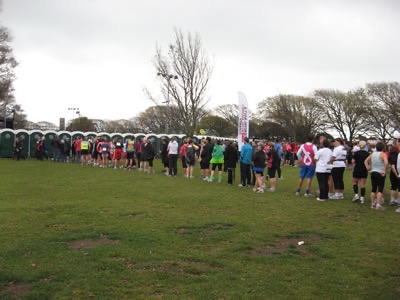
9. Consider the number and type of toilets and washing facilities as part of an assessment of needs. Key factors to consider include:
- audience size and demographics (e.g. provision of suitable facilities for children, the elderly or disabled and wheelchair users attending, who may take longer to use a facility).
- location of the event and type of venue (e.g. a stadium or greenfield site).
- type of facilities available (e.g. cubicles or urinals)
- frequency of emptying temporary toilets
- access to mains services temporary or otherwise
- perceived audience food and fluid consumption
- requirements during intervals and breaks in performance when use may peak
- requirements for campsites
- weather conditions and temperature
- plus, any other factors relevant to the event, such as the provision of non-gender specific facilities and for attendees who may require “changing places” (or high dependency) facilities.
10. Ground conditions must be considered for allowing vehicle access to manage both public and workers sanitation points. By nature, tanker lorries are large and very heavy when full but are essential where facilities are not connected to mains water or drainage.
11. It is important to assess the level of facilities required to reduce the likelihood of excessive queuing, overcrowding and possible disorder as well as unhealthy conditions.